Fire risk assessment and fire door guidance
Clear explanations for property owners, managing agents and Responsible Persons who need to understand the practical fire-safety issues behind an inspection or assessment.
This guidance area answers practical questions about fire risk assessments, fire doors and fire-safety management for property owners, managing agents and Responsible Persons.
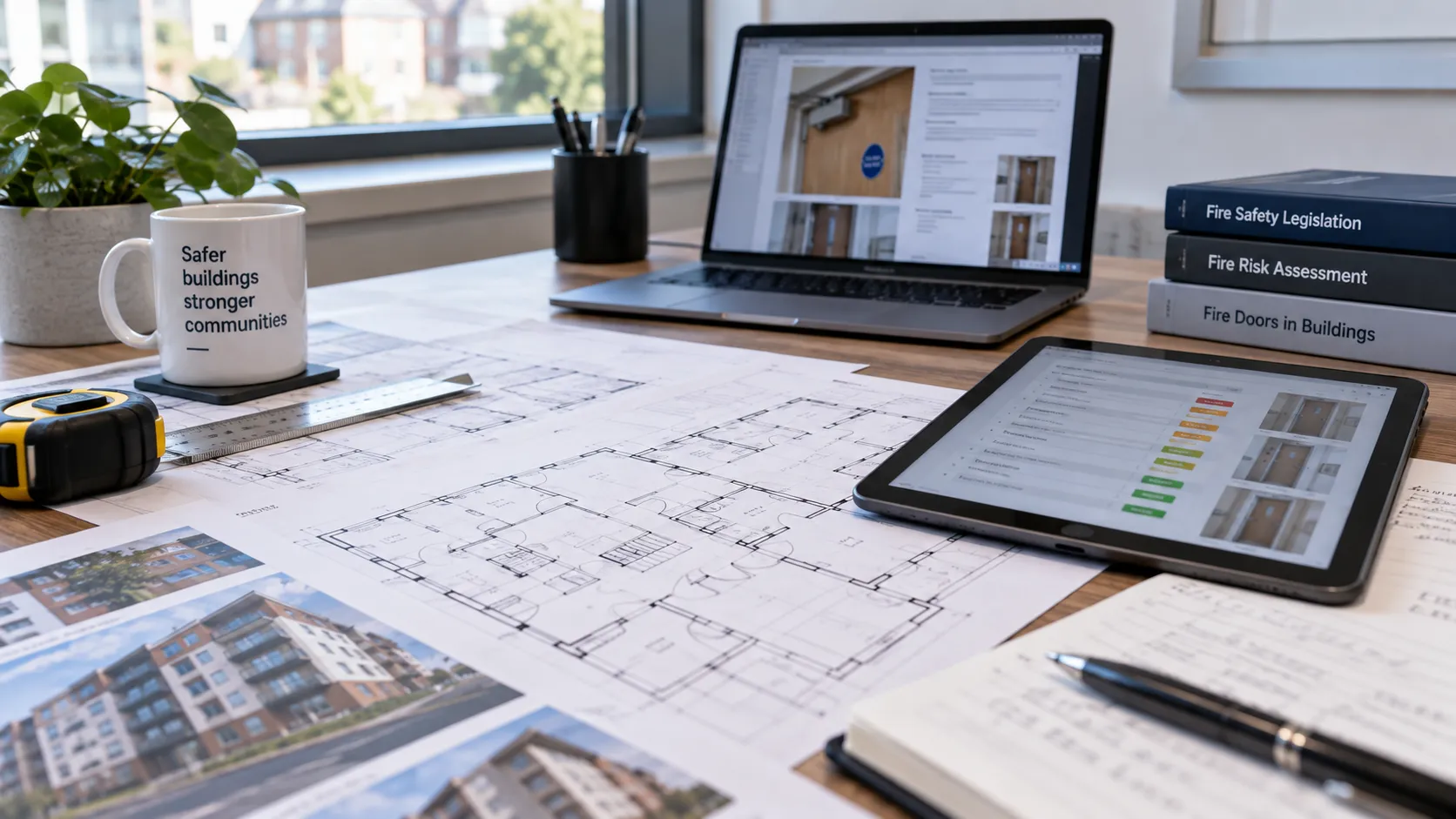
Fire door guidance
Practical guidance on inspection frequencies, what a professional inspection checks and the defects commonly found in blocks of flats.
How often should fire doors be inspected in blocks of flats?
Understand Regulation 10 frequencies and the difference between routine checks and professional inspection.
What does a professional fire door inspection check?
What is considered across the door leaf, frame, gaps, seals, closer, hinges and relevant ironmongery.
Common fire door defects in blocks of flats
Recurring defects, why they matter and when repair, investigation or replacement may be appropriate.
Understanding residential fire risk assessments
Guidance on assessment scope, BS 9792:2025 and how evacuation strategy affects the fire precautions expected in a block of flats.
What is a Type 1 fire risk assessment?
What a non-destructive common-parts assessment covers, what it cannot confirm and when further investigation may be needed.
BS 9792:2025 for managing agents
What the current housing FRA standard means for scope, evidence, limitations and consistent reporting.
Does a block of flats need a communal fire alarm?
Why stay-put blocks are different and when a communal alarm or different evacuation strategy may be needed.
Managing inspections, risks and records
Clear guidance for managing agents and Responsible Persons on coordinating assessments, emerging risks and the records that support ongoing fire-safety management.
Fire risk assessment vs fire door inspection
The difference between the two services, when each is needed and how the evidence should work together.
E-bike and e-scooter fire safety in blocks of flats
Managing lithium-ion battery storage and charging without compromising common escape routes.
What fire safety records should a managing agent keep?
The FRA, fire-safety arrangements, testing, inspections, resident information and evidence of completed actions.
Keeping building arrangements current
Practical guidance on resident instructions, emergency-lighting testing and managing defects while wider responsibility or remediation is being resolved.
Fire action notices and resident fire safety information
What residents should be told, how the instructions should reflect the evacuation strategy and when information must be reissued.
Emergency lighting in blocks of flats: what should be tested?
Monthly functional testing, annual full-duration testing and the records a managing agent should expect.
What if developer responsibility for fire safety defects is unresolved?
How to manage current risk while responsibility, funding, technical investigations and longer-term remediation are still being established.
Commercial fire safety guidance
Practical guidance for employers, landlords, tenants, managing agents and property owners responsible for fire safety in commercial and non-residential premises.
What does a commercial fire risk assessment cover?
Fire hazards, people at risk, escape, alarms, fire doors, management arrangements and records.
How often should a commercial fire risk assessment be reviewed?
When review is legally required, what changes can trigger it and why there is no universal expiry date.
Who is responsible in leased or shared premises?
How duties can overlap between employers, tenants, landlords, owners and managing agents.
Fire alarm testing in commercial premises
Routine testing, competent servicing, fault records and coordination of shared systems.
Emergency lighting testing in commercial premises
Functional tests, full-duration testing, recharge periods and maintenance records.
Fire doors in commercial premises: what should be checked?
Closing performance, condition, gaps, seals, hardware, alterations and proportionate inspection.
Guidance is useful, but some questions need the building context.
If you have a specific fire risk assessment, fire door or management issue, send the relevant information and we can identify the appropriate next step.
Contact Albion Mercer